
Email marketing is one of the most powerful and cost-effective strategies in digital marketing. It allows businesses to communicate directly with customers, build long-term relationships, promote products and services, generate leads, and increase sales. Even with the growth of social media, search engines, and other digital channels, email marketing remains an important tool for businesses of all sizes.
For beginners, understanding email marketing can seem complicated. There are many concepts to learn, including email lists, newsletters, automation, segmentation, personalization, subject lines, conversion rates, and analytics. However, once you understand the fundamentals, you can create effective email marketing campaigns that deliver real business results.
In this complete guide, we will explore what email marketing is, how it works, its benefits, different types of campaigns, strategies, tools, best practices, common mistakes, and the future of email marketing
Email Marketing: The Complete Guide to Building Successful Email Campaigns
Email marketing is one of the most powerful and cost-effective strategies in digital marketing. It allows businesses to communicate directly with their customers, build long-term relationships, promote products and services, generate leads, and increase sales. Even with the growth of social media, search engines, and other digital channels, email remains an important tool for businesses of all sizes.
For beginners, understanding email marketing can seem complicated. There are many concepts to learn, including email lists, newsletters, automation, segmentation, personalization, subject lines, conversion rates, and analytics. However, once you understand the fundamentals, you can create effective email campaigns that deliver real business results.
In this complete guide, we will explore what email marketing is, how it works, its benefits, different types of campaigns, strategies, tools, best practices, common mistakes, and the future of email marketing.
What Is Email Marketing?
Email marketing is a form of digital marketing where businesses communicate with customers or potential customers through email. These emails can be used to share information, promote products, announce offers, educate an audience, build relationships, and encourage customers to take specific actions.
For example, an online clothing store may collect email subscribers through its website. Once someone subscribes, the business can send them a welcome email, introduce its products, provide discount offers, recommend products, and notify them about new collections.
Unlike traditional advertising, email marketing allows businesses to communicate with people who have already expressed interest in their brand.
The goal is not simply to send as many emails as possible. Successful email marketing focuses on sending the right message to the right person at the right time.
Why Is Email Marketing Important?
Email marketing is important because it gives businesses a direct way to communicate with their audience.
Social media platforms can change their algorithms, and businesses have limited control over how their content reaches followers. With an email list, businesses can communicate directly with subscribers who have opted to receive their messages.
Here are some major reasons why businesses use email marketing:
1. Direct Communication
Email provides a direct communication channel between a business and its audience. Instead of waiting for customers to discover your social media post, you can send information directly to their inbox.
2. Cost-Effective Marketing
Compared with many traditional advertising methods, email marketing can be relatively affordable. Small businesses can use email campaigns without requiring a huge advertising budget.
3. Lead Generation
Businesses can use email marketing to convert website visitors into leads. For example, a company can offer a free guide or discount in exchange for a visitor’s email address.
4. Customer Engagement
Regularly providing useful information helps businesses stay connected with customers.
5. Increased Sales
Promotional emails, product recommendations, special offers, and abandoned-cart campaigns can encourage customers to purchase.
6. Customer Retention
Email marketing isn’t only about getting new customers. It can also help businesses maintain relationships with existing customers and encourage repeat purchases.
7. Measurable Performance
Businesses can track metrics such as open rates, click-through rates, conversions, and unsubscribes to understand how their campaigns are performing.
How Does Email Marketing Work?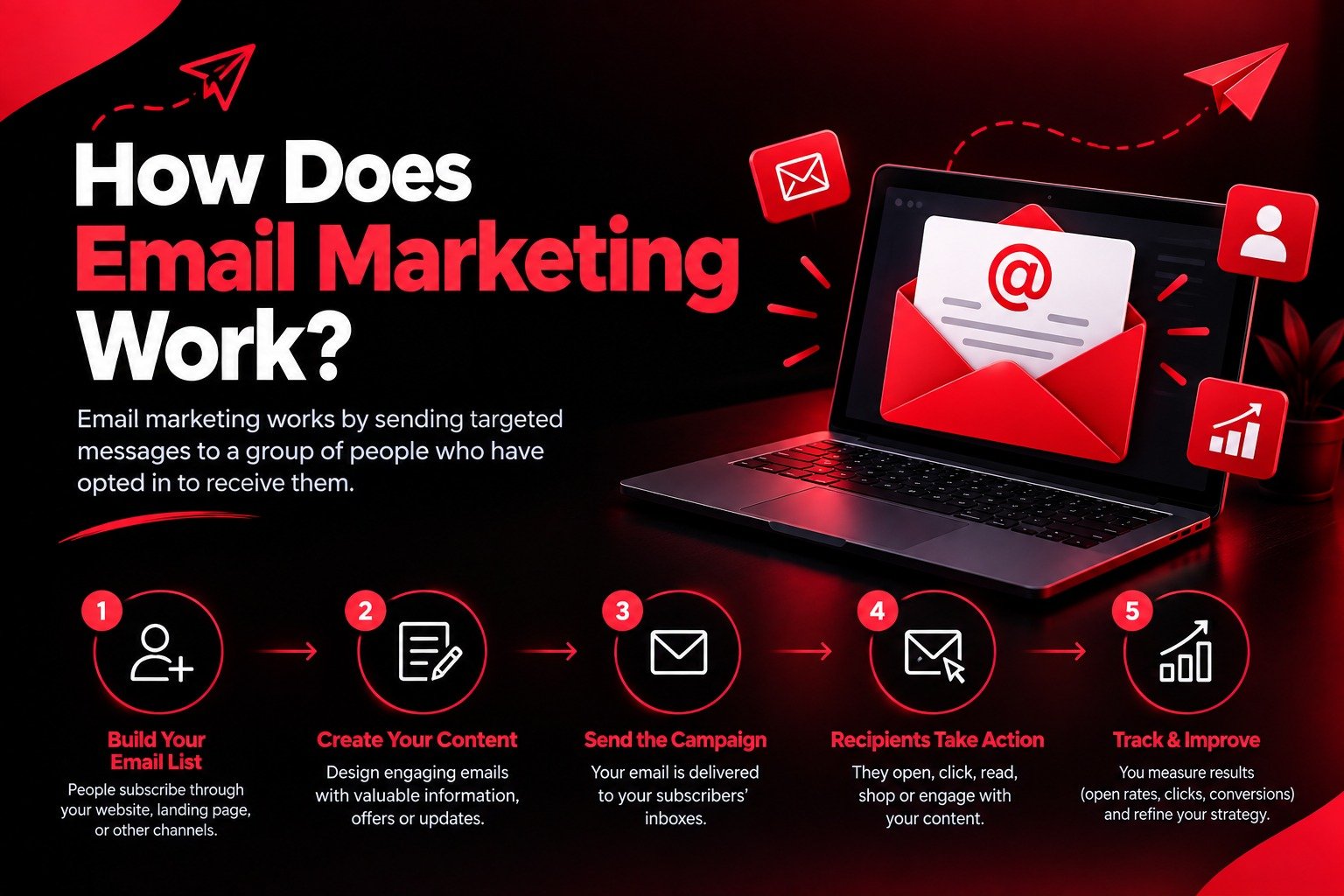
A successful email marketing process usually involves several stages.
Step 1: Build an Email List
The first step is building a list of people who have voluntarily subscribed to receive communications from your business.
Businesses can collect email addresses through:
Website signup forms
Newsletter subscriptions
Landing pages
Free downloadable resources
Online events
Product registrations
Special offers
Lead-generation campaigns
It is important to collect email addresses ethically and obtain appropriate permission before sending marketing communications.
Step 2: Understand Your Audience
Before creating an email campaign, you need to understand who you’re communicating with.
Consider:
Who are your customers?
What problems do they have?
What products or services are they interested in?
What type of content do they want?
What motivates them to purchase?
Understanding your audience allows you to create more relevant emails.
Step 3: Segment Your Audience
Not every subscriber has the same needs.
For example, an online electronics store may have customers interested in:
Smartphones
Laptops
Gaming products
Accessories
Instead of sending the same email to everyone, the business can create different segments and send relevant content to each group.
Step 4: Create the Email
The email should have a clear purpose. It could be educational, promotional, informational, or relationship-focused.
A typical marketing email includes:
Subject line
Introduction
Main content
Image or visual elements
Call-to-action
Business information
Unsubscribe option
Step 5: Send the Campaign
After creating the email, you can schedule it or send it to your selected audience.
Testing your email before sending it is important because mistakes in links, spelling, formatting, or mobile display can negatively affect performance.
Step 6: Analyze the Results
After sending the campaign, analyze the results.
Important metrics include:
Open rate
Click-through rate
Conversion rate
Bounce rate
Unsubscribe rate
Revenue generated
These insights can help you improve future campaigns.
Different Types of Email Marketing
There are many types of email marketing campaigns, and each serves a different purpose.
1. Welcome Emails
A welcome email is usually sent when someone subscribes to your email list.
It can:
Thank the subscriber
Introduce your brand
Explain what they can expect
Provide a special offer
Direct them to your website
A good welcome email creates a positive first impression.
2. Newsletter Emails
Newsletters are regularly scheduled emails containing useful information.
A newsletter might include:
Blog articles
Industry news
Tips
Product updates
Company news
Special offers
The goal is often to provide consistent value rather than make an immediate sale.
3. Promotional Emails
Promotional emails are designed to promote a product, service, sale, or special offer.
Examples include:
“Get 20% Off This Weekend”
“New Collection Now Available”
“Limited-Time Offer”
Promotional emails should still provide value and should not overwhelm subscribers with constant sales messages.
4. Abandoned Cart Emails
E-commerce businesses often use abandoned-cart emails when customers add products to their cart but don’t complete their purchase.
A reminder email can encourage customers to return and complete their order.
5. Product Recommendation Emails
Businesses can recommend products based on customer interests or previous purchases.
For example, an online bookstore could recommend books similar to those a customer previously purchased.
6. Re-engagement Emails
Some subscribers may stop opening emails.
A re-engagement campaign attempts to reconnect with inactive subscribers.
For example:
“We Miss You! Here’s Something Special.”
7. Transactional Emails
Transactional emails are triggered by specific customer actions.
Examples include:
Order confirmations
Shipping updates
Password reset emails
Account notifications
Payment confirmations
Although these are not always promotional, they are an important part of customer communication.
Email Marketing Automation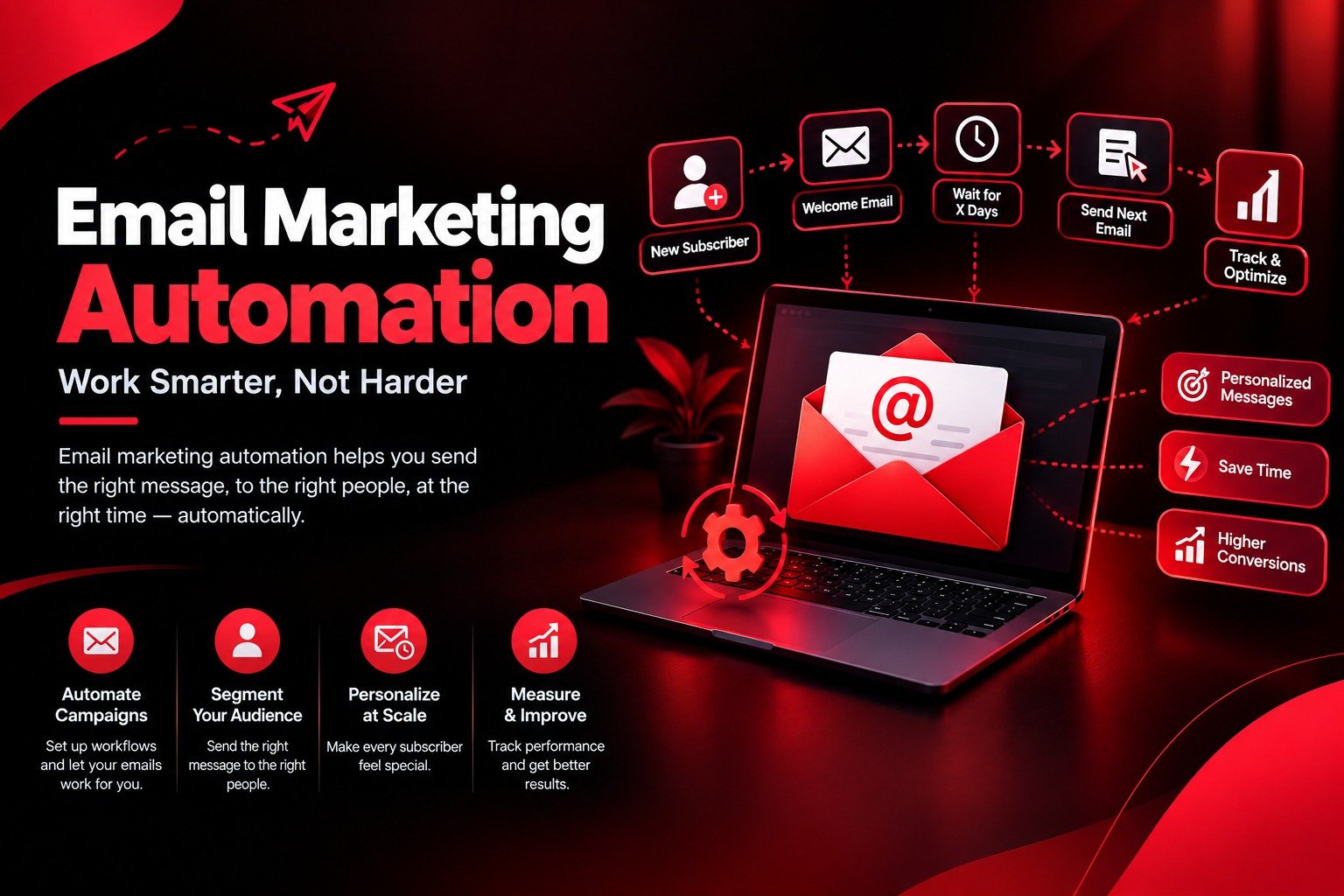
Email marketing automation allows businesses to automatically send emails based on specific actions or conditions.
For example:
A person visits your website → subscribes → receives a welcome email → receives educational content → receives a product recommendation → receives a special offer.
This process can happen automatically.
Automation can help businesses save time and provide a more personalized customer experience.
Examples of Email Automation
Welcome Sequence
Email 1: Welcome
Email 2: Introduction to the brand
Email 3: Educational content
Email 4: Product recommendation
Email 5: Special offer
Customer Journey
Website visitor → Lead → Subscriber → Customer → Repeat Customer
Automation can support customers throughout this journey.
Email List Building Strategies
Building a quality email list is one of the most important parts of email marketing.
Website Signup Forms
Add signup forms to important pages on your website.
For example:
“Subscribe to our newsletter and get the latest updates.”
Lead Magnets
A lead magnet is something valuable offered in exchange for an email address.
Examples include:
E-books
Checklists
Templates
Free guides
Tutorials
Discounts
Webinars
Landing Pages
A dedicated landing page can focus on one specific offer and encourage visitors to subscribe.
Content Marketing
Businesses can use blog posts, videos, and other content to attract visitors and encourage them to join their email list.
Email Marketing Segmentation
Segmentation means dividing your email audience into smaller groups based on specific characteristics or behaviors.
You could segment subscribers by:
Age group
Location
Interests
Purchase history
Website behavior
Engagement level
Customer status
For example, an e-commerce company could create segments for:
New Customers
Repeat Customers
Inactive Customers
High-Value Customers
Each group can receive different messages.
This makes email campaigns more relevant and can improve engagement.
Personalization in Email Marketing
Personalization means creating email content that is more relevant to individual subscribers.
Instead of sending a completely generic email, businesses can use information such as:
Customer name
Previous purchases
Interests
Location
Browsing behavior
For example:
Generic:
“Check out our latest products.”
Personalized:
“Hi Ameen, check out these new products selected for you.”
However, personalization should be used responsibly and transparently.
How to Write an Effective Email Subject Line
The subject line is one of the most important parts of an email.
A good subject line should be:
Clear
Relevant
Concise
Interesting
Honest
Examples:
“Your Weekend Discount Is Here”
“5 Digital Marketing Tips for Beginners”
“Your Free SEO Guide Is Ready”
Avoid misleading subject lines simply to increase opens. The content of the email should deliver what the subject line promises.
How to Write Better Email Content
The content of your email should be easy to read and understand.
Keep It Simple
Avoid unnecessary complicated language.
Focus on One Main Goal
If the purpose of your email is to promote a product, make that goal clear.
Use Short Paragraphs
Large blocks of text can be difficult to read, especially on mobile devices.
Use Clear CTAs
Your call-to-action should tell the reader what to do next.
Examples:
Shop Now
Read the Article
Download the Guide
Get Started
Learn More
Book a Demo
Mobile-Friendly Email Marketing
A large number of people read emails on smartphones.
Therefore, your emails should be designed to work properly on mobile devices.
Make sure:
Text is easy to read.
Buttons are easy to tap.
Images load properly.
Links work correctly.
The layout doesn’t look broken.
The email isn’t unnecessarily long.
Always test your email on different screen sizes before launching an important campaign.
Important Email Marketing Metrics
Analytics is essential for understanding whether your campaigns are successful.
Open Rate
Open rate measures the percentage of delivered emails that were opened.
It can provide insight into how effective your subject line and audience targeting are, although modern privacy features can make this metric less precise than it once was.
Click-Through Rate
Click-through rate measures how many recipients clicked a link in your email.
It helps you understand whether your content and call-to-action encouraged engagement.
Conversion Rate
Conversion rate measures how many recipients completed the desired action.
For example:
Purchased a product
Registered for an event
Downloaded an ebook
Filled out a form
Bounce Rate
Bounce rate refers to emails that could not be delivered.
A high bounce rate can indicate problems with your email list quality.
Unsubscribe Rate
This shows how many people chose to unsubscribe from your emails.
If unsubscribes increase significantly, you should examine your content, frequency, targeting, and audience expectations.
A/B Testing in Email Marketing
A/B testing involves comparing two versions of an email to see which performs better.
You can test:
Subject lines
CTA text
Email design
Images
Content
Sending times
For example:
Version A:
“Get 20% Off Today”
Version B:
“Your Exclusive 20% Discount Is Waiting”
By testing different versions, marketers can learn what resonates with their audience.
Best Email Marketing Tools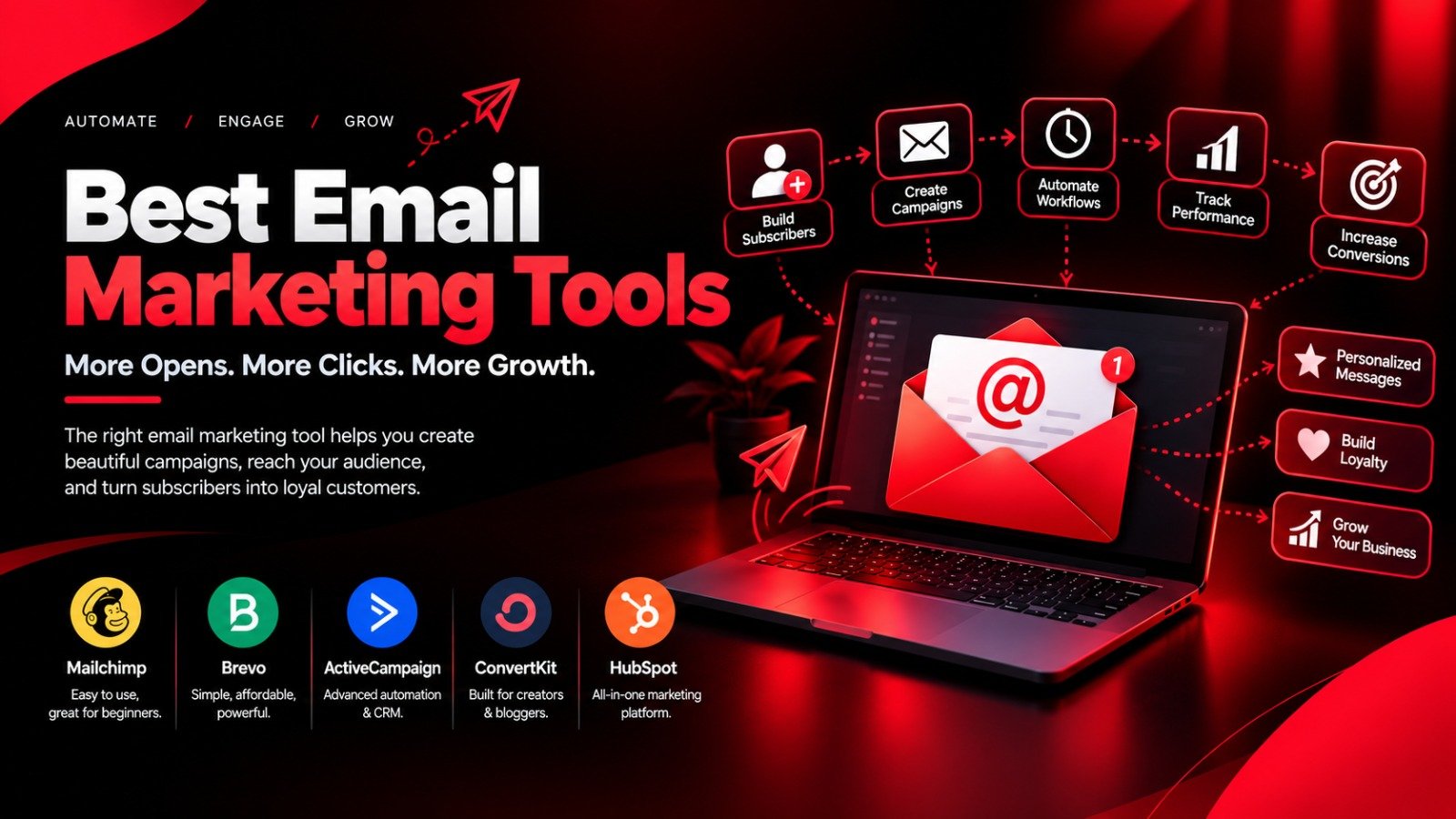
Several platforms can help businesses create, automate, and analyze email campaigns.
Popular categories of email marketing tools include:
Email campaign platforms
Marketing automation platforms
Customer relationship management systems
Analytics tools
Lead-generation tools
When selecting an email marketing platform, consider:
Pricing
Automation features
Templates
Analytics
Contact limits
Integration options
Ease of use
Deliverability features
The best platform depends on your business requirements and budget.
Email Marketing Best Practices
To create effective campaigns, follow these practices:
1. Get Permission
Only send marketing emails to people who have appropriately opted in.
2. Provide Value
Don’t make every email a sales pitch.
Provide useful information, education, entertainment, or relevant offers.
3. Be Consistent
Create a reasonable sending schedule that your audience can expect.
4. Segment Your Audience
Send relevant content to different groups.
5. Personalize Carefully
Use personalization when it genuinely improves relevance.
6. Optimize for Mobile
Make sure emails work properly on smartphones.
7. Test Before Sending
Check links, spelling, images, formatting, and the overall experience.
8. Monitor Performance
Use analytics to understand what’s working and what needs improvement.
9. Respect Unsubscribes
Make it easy for subscribers to stop receiving marketing emails.
10. Follow Applicable Laws
Email marketing should comply with applicable privacy, consent, and marketing regulations in the countries where you operate and where your recipients are located.
Common Email Marketing Mistakes
Many businesses make mistakes that can reduce campaign performance.
Sending Too Many Emails
Sending emails too frequently can annoy subscribers and increase unsubscribes.
Buying Email Lists
Purchased lists can contain irrelevant or low-quality contacts and may create compliance and deliverability problems.
Building a permission-based list is a much better long-term strategy.
Using Misleading Subject Lines
A misleading subject line may get an open but can damage trust.
Ignoring Mobile Users
An email that looks good on desktop but terrible on mobile can lose potential customers.
No Clear CTA
If readers don’t know what to do next, your campaign may not generate meaningful results.
Focusing Only on Sales
If every email asks customers to buy something, subscribers may lose interest.
Balance promotional content with useful information.
Email Marketing for Small Businesses
Email marketing can be especially useful for small businesses because it allows them to maintain relationships with customers without relying entirely on expensive advertising.
A small business could use email marketing to:
Announce new products
Send special offers
Share educational content
Collect customer feedback
Promote events
Encourage repeat purchases
Build brand loyalty
For example, a local bakery could collect customer emails and send weekly updates about new products, special offers, and seasonal items.
Email Marketing and SEO
Email marketing and SEO are different digital marketing strategies, but they can support each other.
For example, a business can publish a blog optimized for search engines and then promote that blog through its email newsletter.
The process can look like:
SEO → Website Traffic → Email Signup → Email Marketing → Customer
Email campaigns can also help distribute valuable content to an existing audience.
Email Marketing and Social Media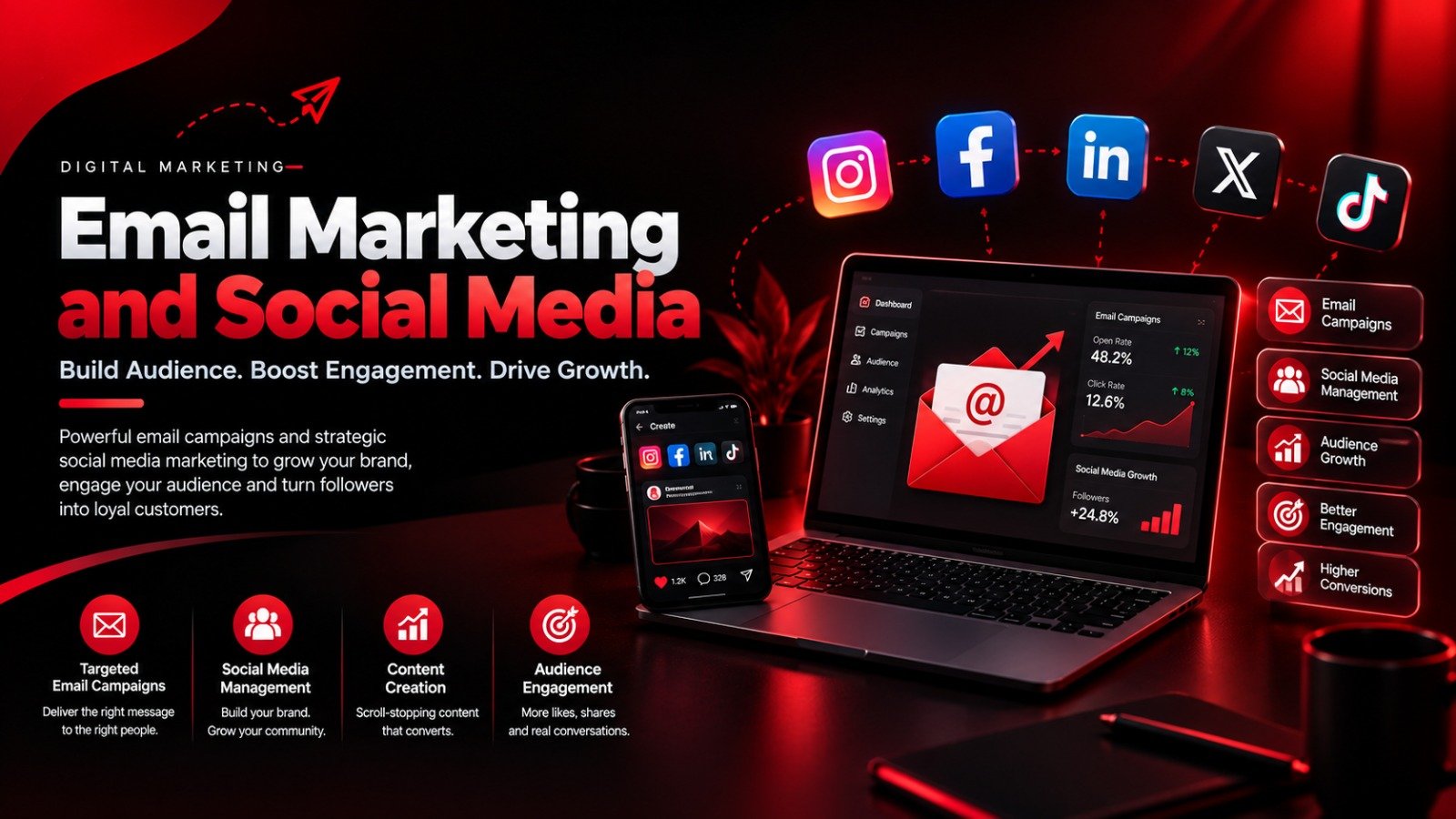
Email marketing and social media can work together as part of a broader digital marketing strategy.
For example, a business could:
Use Instagram to attract followers.
Encourage followers to join an email list.
Send useful content through email.
Use social media to continue engaging with customers.
Use email to promote important offers and content.
Instead of treating email and social media as competitors, businesses can use both channels together.
The Future of Email Marketing
The future of email marketing will increasingly involve personalization, automation, artificial intelligence, behavioral data, and better customer segmentation.
AI tools can help marketers with tasks such as:
Generating subject-line ideas
Creating content drafts
Analyzing customer behavior
Segmenting audiences
Personalizing recommendations
Automating customer journeys
However, technology should support good marketing strategy rather than replace it. Understanding the audience and delivering genuine value will remain essential.
Conclusion
Email marketing is a powerful part of digital marketing that can help businesses build relationships, generate leads, increase sales, retain customers, and communicate directly with their audience.
A successful email marketing strategy requires more than sending promotional messages. Businesses need to build a permission-based email list, understand their audience, create valuable content, segment subscribers, personalize communication, use automation, and continuously analyze campaign performance.
For beginners in digital marketing, email marketing is an important skill to learn because it connects several areas of marketing, including content creation, customer psychology, lead generation, automation, analytics, and conversion optimization.
When used strategically and responsibly, email marketing can become a valuable long-term channel for building customer relationships and growing a business.
Close
given seo title seo meta descrption seo peramalink include call to action , permalonk include foucs keyword neuromarketing adevrtisinggive me seo title meta seo description seo permalink include call to action , peramalink include focus keyword email marketing